
<?xml version="1.0" encoding="utf-8"?>
<feed xmlns="http://www.w3.org/2005/Atom" xml:lang="en">

    <title type="text">Culture Making Articles items tagged cultural worlds</title>
    <subtitle type="text">Culture Making Articles:Writing on Christianity and culture from Andy Crouch</subtitle>
    <link rel="alternate" type="text/html" href="http://culture-makers.com/" />
    <link rel="self" type="application/atom+xml" href="https://culture-making.com/tag/atom" />
    <updated>2025-01-03T22:54:05Z</updated>
    <rights>Copyright (c) 2025, Andy Crouch</rights>
    <generator uri="http://www.pmachine.com/" version="7.5.15">ExpressionEngine</generator>
    <id>tag:culture-makers.com,2025:01:02</id>

    <entry>
      <title>Love is a cough that cannot be hid</title>
      <link rel="alternate" type="text/html" href="https://culture-making.com/post/love_is_a_cough_that_cannot_be_hid" />
      <id>tag:culture-makers.com,2025:author/1.2033</id>
      <published>2025-01-02T22:53:00Z</published>
      <updated>2025-01-03T22:54:05Z</updated>
      <author>
            <name>Andy Crouch</name>
            <email>andy@culture-making.com</email>
            
      </author>

      <content type="html"><![CDATA[


					<b>Nate: </b><em>?The <a href="http://en.wikipedia.org/wiki/Kanga_(African_garment)">kanga</a> is the East African version of the brightly colored bolts of cloth familiar throughout the continent (and beyond—the Indian sari and Asian sarong aren't too different). Wrapped around the waist or shoulders, tied as headscarves, repurposed as child carriers, sewn into blouses and men's shirts—there's not much the kanga can't do. Though much of the cloth you see in Africa has topical prints and slogans intermingling with the wild patterns, kangas tend to have a single slogan running along the bottom, generally a Swahili proverb or riddle. I have a kanga hanging in my office window that reads HAMADI KIBINDONI SILAHA MKONONI, which turns out to be an encouragement to frugality whose literal meaning is something like "money in your underwear, a weapon in your hand". The kanga pictured above unravels its mystery a little more easily into this post's title.?</em><br />
		
		<a href="http://allmyeyes.blogspot.com/2012/02/love-is-like-cough-and-other-swahili.html"><img src="http://www.culture-making.com/media/mapenzi.jpg" alt="photo" /></a><hr />
<div class="author" style="font-size: -1">from "<a href="http://allmyeyes.blogspot.com/2012/02/love-is-like-cough-and-other-swahili.html">2009 Khanga Designs with Methali</a>," found at <a href="http://zanzibarifestival.myevent.com/3/quiz.htm">Zanzibari Reunion</a> :: via <a href="http://allmyeyes.blogspot.com/2012/02/love-is-like-cough-and-other-swahili.html">ALL MY EYES</a></div>		


      ]]></content>
    </entry>    <entry>
      <title>Winter Landscape, by Keisai Eisen</title>
      <link rel="alternate" type="text/html" href="https://culture-making.com/post/winter_landscape_by_keisai_eisen" />
      <id>tag:culture-makers.com,2025:author/1.2030</id>
      <published>2025-01-02T22:53:00Z</published>
      <updated>2025-01-03T22:54:05Z</updated>
      <author>
            <name>Andy Crouch</name>
            <email>andy@culture-making.com</email>
            
      </author>

      <content type="html"><![CDATA[


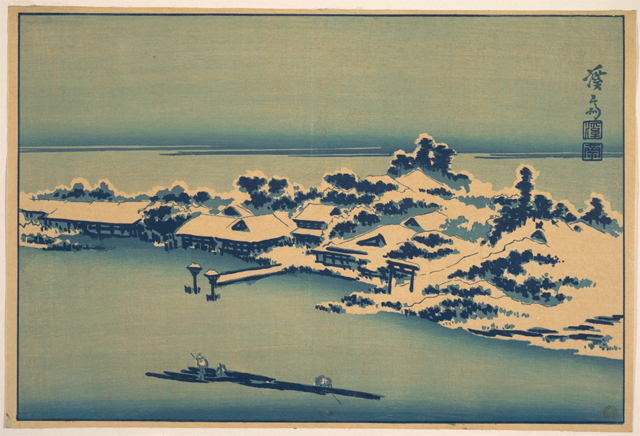
					<b>Nate: </b><em>?Here's something I didn't know: this lovely print belongs to a genre of artwork called <a href="http://en.wikipedia.org/wiki/Ukiyo-e">ukiyo-e</a>, whose name translates literally as "pictures of the floating world." They celebrated the the evanescent impermance of natural scenes and moments, but also of the heightened worlds of entertainment (kabuki, geisha). Because they could be mass-produced, they introduced ownable artwork to new classes of Japanese people.?</em><br />
		
		<a href="http://www.metmuseum.org/collections/search-the-collections/60001107"><img src="http://www.culture-making.com/media/edo-winter.jpg" alt="image" /></a><hr />
<div class="author" style="font-size: -1">"<a href="http://www.metmuseum.org/collections/search-the-collections/60001107">Winter Landscape</a>," polychrome woodblock print by Keisai Eisen (1790–1848), from the collections of <a href="http://www.metmuseum.org/collections/search-the-collections/60001107">The Metropolitan Museum of Art</a></div>		


      ]]></content>
    </entry>    <entry>
      <title>The Wexford Carol &#45; Allison Krauss with Yo&#45;Yo Ma</title>
      <link rel="alternate" type="text/html" href="https://culture-making.com/post/yo-yo_maalison_krauss_-_the_wexford_carol_-_youtube" />
      <id>tag:culture-makers.com,2025:author/1.2006</id>
      <published>2025-01-02T22:53:00Z</published>
      <updated>2025-01-03T22:54:05Z</updated>
      <author>
            <name>Andy Crouch</name>
            <email>andy@culture-making.com</email>
            
      </author>

      <content type="html"><![CDATA[


			<p><iframe width="420" height="236" src="http://www.youtube.com/embed/yxDZjg_Igoc" frameborder="0" allowfullscreen></p><p></iframe></p><br />
<b>Nate: </b><em>?A little third-week-of-Advent music for our faithful readers. It's hardly either lead artist's best work, but still quite a combo. It takes a little while to verify that much of the backing music isn't coming from the cello. Lyrics and history of the carol are <a href="http://www.hymnsandcarolsofchristmas.com/Hymns_and_Carols/wexford_carol.htm">here<a>.?</em><br />
<hr /><span style="font-size: -1">"<a href="http://www.youtube.com/watch?v=yxDZjg_Igoc&feature=youtu.be">The Wexford Carol</a>," by Yo-Yo Ma featuring Alison Krauss, part of Ma's album <i><a href="http://www.youtube.com/watch?v=yxDZjg_Igoc&feature=youtu.be">Songs of Joy & Peace</a></i>, 2008 :: via Metafilter's  <a href="http://www.metafilter.com/110375/TwentyFive-SemiObscure-Traditional-Christmas-Songs-as-Performed-by-Famous-and-NonFamous-People">Twenty-Five Semi-Obscure Traditional Christmas Songs as Performed by Famous and Non-Famous People</a></span>


      ]]></content>
    </entry>    <entry>
      <title>Tastes great, but is it art?</title>
      <link rel="alternate" type="text/html" href="https://culture-making.com/post/tastes_great_but_is_it_art" />
      <id>tag:culture-makers.com,2025:author/1.1350</id>
      <published>2025-01-02T22:53:00Z</published>
      <updated>2025-01-03T22:54:05Z</updated>
      <author>
            <name>Andy Crouch</name>
            <email>andy@culture-making.com</email>
            
      </author>

      <content type="html"><![CDATA[


					<b><p>Nate</p>: </b><em>?Fun and important questions about the aesthetics of food (and, for that matter, the aesthetics of aesthetics). At the end of the day it's all culture, though.?</em><br />
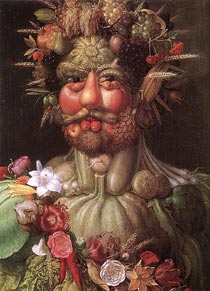
		
		<div style="float:right; padding:15px 5px 5px 5px"><img src="http://culture-making.com/media/433px-Arcimboldovertemnus_210.jpg" alt="image"></div><p>What issues might we be thinking about in trying to decide whether to classify cooking as one of the arts? Here are some.</p>
<p>1) Is the person who says of the Chateau Petrus they have just tasted that it is a work of art to be taken literally? </p>
<p>2) Is the experience we have of a Beethoven String Quartet sufficiently different from that we have when eating a great meal so that we should distinguish them as different kinds of experience?</p>
<p>3) Does it make sense to say of someone that they have been moved by a meal?</p>
<p>4) Is it significant for classifying something as an art form that a meal is consumed in the process of appreciation?</p>
<p>5) When I say of Grant Achatz that he is an artist in the kitchen how does this differ from saying he is a genius at the stove?</p>
<p>6) Why do we distinguish between the architect who designed Notre Dame and those who built it by designating the latter as craftsmen and the former as an artist? Is there a class bias exhibited by this distinction?</p>
<p>7) A piece of music can express sadness. A pate cannot. So?
</p><hr />
<div class="author" style="font-size: -1">from "<a href="http://www.3quarksdaily.com/3quarksdaily/2009/03/penne-for-your-thought.html">Penne for Your Thought</a>," by Gerald Dworkin, <a href="http://www.3quarksdaily.com/3quarksdaily/2009/03/penne-for-your-thought.html">3quarksdaily</a>, 9 March 2009 :: <a href="http://en.wikipedia.org/wiki/Giuseppe_Arcimboldo">Vertemnus / Rudolf II</a>, by Giuseppe Arcimboldo (1527–1593), Wikipedia :: first posted here 18 March 2009</div>		


      ]]></content>
    </entry>    <entry>
      <title>Beach calligraphy by Andrew van der Merwe</title>
      <link rel="alternate" type="text/html" href="https://culture-making.com/post/beach_calligraphy_by_andrew_van_der_merwe" />
      <id>tag:culture-makers.com,2025:author/1.1614</id>
      <published>2025-01-02T22:53:00Z</published>
      <updated>2025-01-03T22:54:05Z</updated>
      <author>
            <name>Andy Crouch</name>
            <email>andy@culture-making.com</email>
            
      </author>

      <content type="html"><![CDATA[


					<b>Nate: </b><em>?South African calligrapher Andrew van der Merwe has developed various wedge- and scoop-shaped tools to allow him to carve letters out of beach sand. This is a picture of one of his creations, on a beach in Belgium.?</em><br />
		
		<a href="http://j-laf.org/2008/10/worlds-project-report-beach-ca.html"><img src="http://www.culture-making.com/media/beachscript.jpg" alt="photo" /></a><hr />
<div class="author" style="font-size: -1">image from "<a href="http://j-laf.org/2008/10/worlds-project-report-beach-ca.html">Beach Calligraphy</a>," by Andrew van der Merwe, <a href="http://j-laf.org/2008/10/worlds-project-report-beach-ca.html">Japan Letter Arts Forum</a>, 21 October 2008 :: via <a href="http://ministryoftype.co.uk/words/article/andrew_van_der_merwe/">The Ministry of Type</a> :: first posted here 8 September 2009</div>		


      ]]></content>
    </entry>    <entry>
      <title>From NASA to McDonald’s</title>
      <link rel="alternate" type="text/html" href="https://culture-making.com/post/from_nasa_to_mcdonalds" />
      <id>tag:culture-makers.com,2025:author/1.577</id>
      <published>2025-01-02T22:53:00Z</published>
      <updated>2025-01-03T22:54:05Z</updated>
      <author>
            <name>Andy Crouch</name>
            <email>andy@culture-making.com</email>
            
      </author>

      <content type="html"><![CDATA[


					<b><p>Nate</p>: </b><em>?Performance artist Laurie Anderson on the importance of getting outside your own identity. I love her three-tiered description of how she sees the world.?</em><br />
		
		<p><strong>In 2002 you were NASA’s first artist in residence, Why you?</strong><br>Because I have a reputation for being a gear head and a wire head. It was a really great gig. I went to mission control in Pasadena, and I met the guy who figures out how to color the stars in the photos taken by the Hubble Space Telescope. </p>
<p>The opportunity came about completely out of the blue, as many things are in my life. Somebody called and said “Do you want to be the first artist in residence at NASA?” and I said “What does that mean in a space program?” and they said “ Well, we don’t know what that means. What does it mean to you?” I was like “Who are you people? What does it mean to me? What are you talking about?”</p>
<p><strong>You’ve also worked at McDonald’s.</strong><br>Yeah. I began to think, “How can I escape this trap of just experiencing what I expect?” I decided maybe I would just try to put myself in places where I don’t know what to do, what to say, or how to act. So, I did things like working at McDonald’s and on an Amish farm, which had no technology whatsoever.
</p>
<p><strong>What do you need to “escape” from?</strong><br />At heart, I’m an anthropologist. I try to jump out of my skin. I normally see the world as an artist first, second as a New Yorker and third as a woman. That’s a perspective that I sometimes would like to escape. It’s why in my performances I use audio filters to change my voice. That’s a way to escape as well.
</p><hr />
<div class="author" style="font-size: -1">from <a href="http://www.smithsonianmag.com/arts-culture/atm-qa-anderson.html?c=y&page=1">Laurie Anderson Q&A</a>, by Kenneth R. Fletcher, <a href="http://www.smithsonianmag.com/"><i>Smithsonian Magazine</i></a>, Auguest 2008 :: via <a href="http://www.boingboing.net/2008/07/29/laurie-anderson-inte.html">Boing Boing</a> :: first posted here 4 August 2008</div>		


      ]]></content>
    </entry>    <entry>
      <title>Strawberries and reindeer</title>
      <link rel="alternate" type="text/html" href="https://culture-making.com/post/strawberries_and_reindeer" />
      <id>tag:culture-makers.com,2025:author/1.870</id>
      <published>2025-01-02T22:53:00Z</published>
      <updated>2025-01-03T22:54:05Z</updated>
      <author>
            <name>Andy Crouch</name>
            <email>andy@culture-making.com</email>
            
      </author>

      <content type="html"><![CDATA[


					<b><p>Nate</p>: </b><em>?From an interstitial essay in a wonderful book of portraits and reportage examining what foods "typical" families from around the world eat in the course of a week.?</em><br />
		
		<p>Cooking is universal among our species. Cooking is even more uniquely characteristic of our species than language. Animals do at least bark, roar, chirp, do at least signal by sound; only we bake, boil, roast and fry&#8230;.</p>
<p>Few advances comparable in importance to cooking have happened since [its development]. The most important have been more quantitative than qualitative. We began not simply to harvest but to adopt certain palatable plants and animals as aids and conspirators. By 3,000 to 4,000 years ago, we had domesticated all those that have been central to our diets ever sense—barley, wheat, rice, maize, potatoes, sheep, goats, cattle, horses, and so on&#8230;. We have domesticated nothing more significant than strawberries and reindeer since.</p><hr />
<div class="author" style="font-size: -1">from "<a href="about:blank">Baked, Boiled, Roasted and Fried</a>," by Alfred W. Crosby, in Peter Menzel and Faith D'Alusio's <a href="http://www.amazon.com/Hungry-Planet-What-World-Eats/dp/1580086810"><i>Hungry Planet: What the World Eats</i></a>, 2005 :: first posted here 29 September 2008</div>		


      ]]></content>
    </entry>    <entry>
      <title>Mountain Chief of Piegan Blackfeet, 1916</title>
      <link rel="alternate" type="text/html" href="https://culture-making.com/post/mountain_chief_of_piegan_blackfeet_1916" />
      <id>tag:culture-makers.com,2025:author/1.996</id>
      <published>2025-01-02T22:53:00Z</published>
      <updated>2025-01-03T22:54:05Z</updated>
      <author>
            <name>Andy Crouch</name>
            <email>andy@culture-making.com</email>
            
      </author>

      <content type="html"><![CDATA[


					<b><p>Nate</p>: </b><em>?Although in this case the phonograph horn is used for recording, this photo's nonetheless an interesting visual precursor to the famous <a href="http://reel2reeltexas.com/vin80Maxell.jpg">Maxell tape ad</a>. Meanwhile, Wikipedia says that the Piegan Blackfeet these days live mostly on the larger Blackfeet Nation in northwestern Montana.?</em><br />
		
		<a href="http://www.shorpy.com/node/3582?size=_original"><img src="http://culture-making.com/media/20061u.jpg" alt="photo" /></a><hr />
<div class="author" style="font-size: -1">"Mountain Chief of Piegan Blackfeet making phonographic record at Smithsonian," 9 February 1916, posted at <a href="http://www.shorpy.com/node/3582?size=_original">Shorpy Photo Archive</a> :: via <a href="http://ffffound.com/image/692ab135308d4b1c0953d339e7178ba8640d468c">FFFFOUND!</a> :: first published here 30 October 2008</div>		


      ]]></content>
    </entry>    <entry>
      <title>Mental illness and missing stories</title>
      <link rel="alternate" type="text/html" href="https://culture-making.com/post/mental_illness_and_missing_stories" />
      <id>tag:culture-makers.com,2025:author/1.1783</id>
      <published>2025-01-02T22:53:00Z</published>
      <updated>2025-01-03T22:54:05Z</updated>
      <author>
            <name>Andy Crouch</name>
            <email>andy@culture-making.com</email>
            
      </author>

      <content type="html"><![CDATA[


					<b>Nate: </b><em>?Alhough the standard psychiatric diagnostic manual relegates 'culture-bound' illnesses to an exotic appendix at the end of the book, Western conceptions of mental illness are themselves 'culture-bound'—an observation close to my historian-of-science's heart, and one well-explored in both Watters' article and in <a href="http://neuroanthropology.net/2010/01/10/exporting-american-mental-illness/">this thoughtful commentary</a>.?</em><br />
		
		<p>No one would suggest that we withhold our medical advances from other countries, but it’s perhaps past time to admit that even our most remarkable scientific leaps in understanding the brain haven’t yet created the sorts of cultural stories from which humans take comfort and meaning. When these scientific advances are translated into popular belief and cultural stories, they are often stripped of the complexity of the science and become comically insubstantial narratives. Take for instance this Web site text advertising the antidepressant Paxil: “Just as a cake recipe requires you to use flour, sugar and baking powder in the right amounts, your brain needs a fine chemical balance in order to perform at its best.” The Western mind, endlessly analyzed by generations of theorists and researchers, has now been reduced to a batter of chemicals we carry around in the mixing bowl of our skulls.</p><p>All cultures struggle with intractable mental illnesses with varying degrees of compassion and cruelty, equanimity and fear. Looking at ourselves through the eyes of those living in places where madness and psychological trauma are still embedded in complex religious and cultural narratives, however, we get a glimpse of ourselves as an increasingly insecure and fearful people. Some philosophers and psychiatrists have suggested that we are investing our great wealth in researching and treating mental illness — medicalizing ever larger swaths of human experience — because we have rather suddenly lost older belief systems that once gave meaning and context to mental suffering.</p><hr />
<div class="author" style="font-size: -1">from "<a href="http://www.nytimes.com/2010/01/10/magazine/10psyche-t.html?pagewanted=print">The Americanization of Mental Illness</a>," by Ethan Watters, <a href="http://www.nytimes.com/2010/01/10/magazine/10psyche-t.html?pagewanted=print"><i>The New York Times Magazine</i></a>, 10 January 2010 :: via <a href="http://www.3quarksdaily.com/3quarksdaily/2010/01/the-americanization-of-mental-illness.html">3quarksdaily</a> :: first posted here 15 January 2010</div>		


      ]]></content>
    </entry>    <entry>
      <title>Chinatown bus geography</title>
      <link rel="alternate" type="text/html" href="https://culture-making.com/post/chinatown_bus_geography" />
      <id>tag:culture-makers.com,2025:author/1.1254</id>
      <published>2025-01-02T22:53:00Z</published>
      <updated>2025-01-03T22:54:05Z</updated>
      <author>
            <name>Andy Crouch</name>
            <email>andy@culture-making.com</email>
            
      </author>

      <content type="html"><![CDATA[


					<b><p>Nate</p>: </b><em>?Telephone area codes provide an alternate means of envisioning the United States. And not just for Chinese restaurant workers: there's also <a href="http://strangemaps.wordpress.com/2008/03/09/254-ludacris-rap-map-of-us-area-codes/">Ludicris' Rap Map</a>.?</em><br />
		
		<p align="center"><img src="http://culture-making.com/media/3187200686_3cfe794cfb.jpg" alt="image"></p><p>These two are <a href="http://en.wikipedia.org/wiki/Chinatown_bus_lines">Chinatown bus</a> advertisements for routes that go to the more obscure regions of the eastern United States. (Chinatown bus goes all over, not just Boston, NYC, Philly and Washington). Notice how they emphasize the area codes.</p><p>That is because many Fujianese restaurant workers are not educated and thus don’t really read and write English. Given that. How do you divide the United States? Not through towns and states. You do it through numbers—hence the area codes.</p><hr />
<div class="author" style="font-size: -1">from "<a href="http://www.fortunecookiechronicles.com/blog/2009/01/17/the-chinese-restaurant-workers-view-of-america-through-area-codes/">The Chinese Restaurant Workers’ View of America: Through Area Codes</a>," by Jennifer 8. Lee, <a href="http://www.fortunecookiechronicles.com/blog/2009/01/17/the-chinese-restaurant-workers-view-of-america-through-area-codes/">The Fortune Cookie Chronicles</a>, 17 January 2009 :: first posted here 23 January 2009</div>		


      ]]></content>
    </entry>    <entry>
      <title>Re&#45;bonjour</title>
      <link rel="alternate" type="text/html" href="https://culture-making.com/post/re_bonjour" />
      <id>tag:culture-makers.com,2025:author/1.1366</id>
      <published>2025-01-02T22:53:00Z</published>
      <updated>2025-01-03T22:54:05Z</updated>
      <author>
            <name>Andy Crouch</name>
            <email>andy@culture-making.com</email>
            
      </author>

      <content type="html"><![CDATA[


					<b><p>Nate</p>: </b><em>?This article, in the long and generally grand literary tradition of "Letters from Paris"—see Adam Gopnik's collection <a href="http://www.amazon.com/Paris-Moon-Adam-Gopnik/dp/0375758232/cmcom-20">Paris to the Moon</a> for a fine recent example—veers towards the ooh-la-la picturesque; one gets the feeling that French people outside Paris, and not-fully-"French" people in it, lead lives less authentic and less interesting. Still, I'm a sucker for them details: I spent half of college writing my messy English notes in lovely multi-lined French journals.?</em><br />
		
		<div style="float:right; padding:15px 5px 5px 5px"><img src="http://culture-making.com/media/cfClothBoundGroup.jpg" alt="image"></div><p>Everyone thinks that people in Paris are impossibly rude. The longer I spend in the city, the more I realise that this is untrue. In fact, they are impossibly polite. Understanding this is the secret to an effortless life in the French capital. Mastering lift etiquette is a good case in point. I arrived in Paris a few years ago from London, where even colleagues would rather stare blankly at the closed doors than venture a greeting. In Paris, by contrast, there is a tightly observed ritual. When the lift doors part, you step in and say “Bonjour”. Everybody says “Bonjour” back. Whenever anyone steps out, you wish them a “Bonne journée”. They do the same. And that’s not all. If later in the day you bump into anyone again, you start all over again with (I’m not making this up) “Re-bonjour”....</p><p>The general French respect for formality and form is nowhere more finely observed than in Paris. ... When my son was learning to write, his school report gave him marks for whether his <i>boucles</i>, or loops, of his joined-up letters respected to the millimetre the inter-line boundaries printed on the page. At the same time, he would bring back English exercise books filled with a chaotic caterpillar of mismatched letters. Why didn’t he use his neat handwriting in those books too, I asked him? He looked perplexed: “But that’s not how you write in English!”</p><hr />
<div class="author" style="font-size: -1">from "<a href="http://www.moreintelligentlife.com/story/parisians-rude-pas-du-tout">Parisians, rude? Pas du tout!</a>," by Sophie Pedder, <a href="http://www.moreintelligentlife.com/story/parisians-rude-pas-du-tout">More Intelligent Life</a>, 18 March 2009 :: Clairfontaine French-ruled notebooks on sale <a href="http://www.thedailyplanner.com/clothbound-notebookfrench-ruled-p-5232.html">here</a> :: first posted here 26 March 2009</div>		


      ]]></content>
    </entry>    <entry>
      <title>Especial refinement and taste</title>
      <link rel="alternate" type="text/html" href="https://culture-making.com/post/especial_refinement_and_taste" />
      <id>tag:culture-makers.com,2025:author/1.1038</id>
      <published>2025-01-02T22:53:00Z</published>
      <updated>2025-01-03T22:54:05Z</updated>
      <author>
            <name>Andy Crouch</name>
            <email>andy@culture-making.com</email>
            
      </author>

      <content type="html"><![CDATA[


					<b><p>Nate</p>: </b><em>?Culture is what you make of the finger bowl!?</em><br />
		
		<p>There are certain words which have been singled out and misused by the undiscriminating until their value is destroyed. Long ago “elegant” was turned from a word denoting the essence of refinement and beauty, into gaudy trumpery. “Refined” is on the verge. But the pariah of the language is culture! A word rarely used by those who truly possess it, but so constantly misused by those who understand nothing of its meaning, that it is becoming a synonym for vulgarity and imitation. To speak of the proper use of a finger bowl or the ability to introduce two people without a blunder as being “evidence of culture of the highest degree” is precisely as though evidence of highest education were claimed for who ever can do sums in addition, and read words of one syllable. Culture in its true meaning is widest possible education, plus especial refinement and taste.</p><hr />
<div class="author" style="font-size: -1">from <i><a href="http://books.google.com/books?id=HhAYAAAAIAAJ&printsec=frontcover&dq=etiquette&ei=HJYcSajXLYb4lQS0p4DYBg#PPA62,M1">Etiquette in Society, in Business, in Politics, and at Home</a></i>, by Emily Post, 1922 :: first posted 13 November 2008</div>		


      ]]></content>
    </entry>    <entry>
      <title>Cheaper than a bottle of coke</title>
      <link rel="alternate" type="text/html" href="https://culture-making.com/post/cheaper_than_a_bottle_of_coke" />
      <id>tag:culture-makers.com,2025:author/1.1048</id>
      <published>2025-01-02T22:53:00Z</published>
      <updated>2025-01-03T22:54:05Z</updated>
      <author>
            <name>Andy Crouch</name>
            <email>andy@culture-making.com</email>
            
      </author>

      <content type="html"><![CDATA[


					<b><p>Nate</p>: </b><em>?"The world's most popular chair"—this one with murkier, more recent origins than the venerable Thonet Model No.14. Still, when Bruce Cockburn sings about his visit to a Mozambique village, "They stuck me in the only chair they had / while the cooked cassava and a luckless hen," there's no doubt which sort of seat he's talking about.?</em><br />
		
		<div style="float:right; padding:15px 5px 5px 5px"><img src="http://culture-making.com/media/Plastic-Chair_210.jpg" alt="image"></div><p>Maybe you’re sitting on one right now. It has a high back with slats, or arches, or a fan of leaf blades, or some intricate tracery. Its legs are wide and splayed, not solid. The plastic in the seat is three-sixteenths of an inch thick. It’s probably white, though possibly green. Maybe you like how handy it is, how you can stack it or leave it outdoors and not worry about it. Maybe you’re pleased that it cost less than a bottle of shampoo.</p><p>No matter what you’re doing, millions of other people around the world are likely sitting right now on a single-piece, jointless, all-plastic, all-weather, inexpensive, molded stacking chair. It may be the most popular chair in history.</p><p>That dawned on me recently after I started noticing The Chair in news photographs from global trouble spots. In a town on the West Bank, an indignant Yasser Arafat holds a broken chair damaged by an Israeli military operation. In Nigeria, contestants in a Miss World pageant are seated demurely on plastic chairs just before riots break out, killing some 200 people. In Baghdad, U.S. administrator L. Paul Bremer III, during a ceremony honoring Iraqi recruits, sits on a white plastic chair as if on a throne&#8230;.</p><p>The plastic chairs in all those places were essentially alike, as far as I could tell, and seemed to be a natural part of the scene, whatever it was. It occurred to me that this humble piece of furniture, criticized by some people as hopelessly tacky, was an item of truly international, even universal, utility. What other product in recent history has been so widely, so to speak, embraced? And how had it found niches in so many different societies and at so many different levels, from posh resorts to dirt courtyards? How did it gain a global foothold?</p><hr />
<div class="author" style="font-size: -1">from "<a href="http://www.smithsonianmag.com/people-places/seat.html?c=y&page=1">Everybody Take A Seat</a>," by Mariana Gosnell, <a href="http://www.smithsonianmag.com/people-places/seat.html?c=y&page=1"><i>Smithsonian</i></a>, July 2004 :: image via <a href="http://neetaexports.tradeindia.com/Exporters_Suppliers/Exporter12938.186559/Plastic-Chair.html">Neeta Exports</a> :: first posted here 17 November 2008</div>		


      ]]></content>
    </entry>    <entry>
      <title>Culture has many addresses</title>
      <link rel="alternate" type="text/html" href="https://culture-making.com/post/culture_has_many_addresses" />
      <id>tag:culture-makers.com,2025:author/1.555</id>
      <published>2025-01-02T22:53:00Z</published>
      <updated>2025-01-03T22:54:05Z</updated>
      <author>
            <name>Andy Crouch</name>
            <email>andy@culture-making.com</email>
            
      </author>

      <content type="html"><![CDATA[


		<p>The insight that culture has many different addresses, and that not every cultural good affects the same public, is the most basic form of “multiculturalism.” Multiculturalism begins with the simple observation that the cumulative, creative process of human culture has happened in widely different places, with widely different results, throughout human history.</p>

<p>&nbsp;</p><br />
		<p><small>	&mdash;<i>Culture Making</i>, p.41</small></p>


      ]]></content>
    </entry>    <entry>
      <title>Secular praise songs from Western Kenya</title>
      <link rel="alternate" type="text/html" href="https://culture-making.com/post/secular_praise_songs_from_western_kenya" />
      <id>tag:culture-makers.com,2025:author/1.1044</id>
      <published>2025-01-02T22:53:00Z</published>
      <updated>2025-01-03T22:54:05Z</updated>
      <author>
            <name>Andy Crouch</name>
            <email>andy@culture-making.com</email>
            
      </author>

      <content type="html"><![CDATA[


					<b><p>Nate</p>: </b><em>?This is from a really wonderful blog (my <a href="http://www.voanews.com/english/africa/blog/">tax dollars at work</a>!) that posts decades-old African pop music, accompanied by lengthy history and commentary. Here's the brief background: "The Kawere Boys were formed by Cheplin Ngode Kotula in Kericho, Kenya in 1974, and over the next four years became one of the more popular Benga groups in Luo land. ... These recordings were not only popular throughout Luo land, but also sold well in Tanzania, Malawi, South Africa, Nigeria, Cameroun, and West Africa." It's fascinating and heartening to learn these tales of cultural spread that bypass the usual centers of power (Europe, the U.S., heck, even Nairobi). Also—fascinating relationship between artist and patron: the patron doesn't just make the song possible, he is the song's subject.?</em><br />
		
		<div style="float:right; padding:15px 5px 5px 5px"><img src="http://culture-making.com/media/pd_africanblog_kaweremuma_420.jpg" alt="image"></div><p><a href="http://www.voanews.com//english/africa/blog/images/Media/KAWERE_BOYS_Muma_Ben.Mp3">The Kawere Boys ‘Muma Ben’ (1974) mp3</a></p>
<p>Most of the songs in the Kawere repertoire seem to be praise songs for patrons who had invited the group to perform. These songs can be thought of as pre-internet age social networking. The singer usually starts by introducing himself, goes on to introduce the object of his praise, as well as the patron’s relatives, friends, and neighbors, before explaining the nature of his relationship to the patron in question. For example, in ‘Muma Ben’, the song starts with an introduction of ‘Muma Ben from Saye Konyango’, then introduces Muma Ben’s family, and ends with praise for the hospitality the singer received when he was invited to Muma Ben’s house. If you were to map out all of the relationships outlined in the Kawere Boys singles in our collection, and if you had a deep understanding of Luo culture, you could get a good idea of the social networks the Kawere Boys relied upon for their livelihood.</p><hr />
<div class="author" style="font-size: -1">from "<a href="http://www.voanews.com/english/africa/blog/index.cfm?mode=entry&entry=9176649F-F9A9-411F-29F74F07F256F725">The Kawere Boys</a>," by Matthew LaVoie, <a href="http://www.voanews.com/english/africa/blog/index.cfm?mode=entry&entry=9176649F-F9A9-411F-29F74F07F256F725">Voice of America African Music Treasures Blog</a>, 12 November 2008 :: first posted here 12 November 2008</div>		


      ]]></content>
    </entry>    <entry>
      <title>Petroglyphs</title>
      <link rel="alternate" type="text/html" href="https://culture-making.com/post/petroglyphs" />
      <id>tag:culture-makers.com,2025:author/1.1019</id>
      <published>2025-01-02T22:53:00Z</published>
      <updated>2025-01-03T22:54:05Z</updated>
      <author>
            <name>Andy Crouch</name>
            <email>andy@culture-making.com</email>
            
      </author>

      <content type="html"><![CDATA[


					<b><p>Nate</p>: </b><em>?Alas, the site offers neither name nor date of these beautiful rock drawings. They have a similar look to those at <a href="http://en.wikipedia.org/wiki/Newspaper_Rock_State_Historic_Monument">Newspaper Rock</a>, near Moab, Utah. The style of many petroglyphs seems to be a sort of elemental human visual consciousness—some of the oldest surviving evidences of culture-making (though if these drawings are as exposed as the picture suggests, they're probably much more recent).?</em><br />
		
		<a href="http://www.citrinitas.com/history_of_viscom/rockandcaves.html"><img src="http://culture-making.com/media/petro01.jpg" alt="photo" /></a><hr />
<div class="author" style="font-size: -1">from <a href="http://www.citrinitas.com/history_of_viscom/rockandcaves.html">The History of Visual Communication</a> :: via <a href="http://ffffound.com/image/6f01721c1a677b91f5fc2158822f944709bbbc67">FFFFOUND!</a> :: first posted here 6 November 2008</div>		


      ]]></content>
    </entry>    <entry>
      <title>Washing away your sins</title>
      <link rel="alternate" type="text/html" href="https://culture-making.com/post/washing_away_your_sins" />
      <id>tag:culture-makers.com,2025:author/1.917</id>
      <published>2025-01-02T22:53:00Z</published>
      <updated>2025-01-03T22:54:05Z</updated>
      <author>
            <name>Andy Crouch</name>
            <email>andy@culture-making.com</email>
            
      </author>

      <content type="html"><![CDATA[


					<b><p>Nate</p>: </b><em>?From an interview with Chen-Bo Zhong, who researches the link between abstract concepts and physical feelings—the deep cultural power of metaphor.?</em><br />
		
		<p><strong>LEHRER:</strong> What are some other examples of how seemingly abstract thoughts, such as feeling excluded, can have physical manifestations?</p><p><strong>ZHONG:</strong> Another example would be the relation between morality and physical cleanliness. In my early work “<a href="http://www.sciencemag.org/cgi/content/abstract/313/5792/1451">Washing Away Your Sins: Threatened Morality and Physical Cleansing</a>” in collaboration with Katie Liljenquist [a professor of organizational behavior at Brigham Young University], we discussed how metaphors such as “<em>dirty hands</em>” or “<em>clean records</em>” may have a psychological basis such that people make sense of morality through <a href="http://www.sciam.com/article.cfm?id=washing-hands-reduces-mor">physical cleanliness</a>.</p><p>When people’s <a href="http://www.sciam.com/article.cfm?id=thinking-about-morality">moral</a> self image is threatened, as when they think about their own unethical past behaviors, people literally experience the need to engage in physical cleansing, as if the moral stain is literally physical dirt. We tested this idea in multiple studies and showed that when reminded of their past moral transgressions, people were more likely to think about cleansing-related words such as <em>“wash”</em> and <em>“soap”</em>, expressed stronger preference for cleansing products (for instance, a soap bar), and were also more likely to accept an antiseptic wipe as a free gift (rather than a pencil with equal value).</p><p>Further, physical cleansing may actually be effective in mentally getting rid of moral sins. In another study, in which participants who recalled unethical behaviors were either given a chance to cleanse their hands or not, we found that washing hands not only assuaged moral emotions such as guilt and regret but also reduced participants’ willingness to engage in <a href="http://www.sciam.com/article.cfm?id=monkeys-experience-joy-of">prosocial behaviors</a> such as <a href="http://www.sciencemag.org/cgi/content/abstract/313/5792/1451">volunteering</a> Thus physical washing can actually wash away sins. Perhaps this effect is why most world religions practice some form of washing rituals to purify souls. We should be cautious, however, knowing that if our sins are so easily “washed away” we might not be as motivated to engage in actual compensatory behaviors to make up for our mistakes.</p><hr />
<div class="author" style="font-size: -1">from "<a href="http://www.sciam.com/article.cfm?id=metaphors-of-the-mind&print=true">Metaphors of the Mind: Why Loneliness Feels Cold and Sins Feel Dirty</a>," by Jonah Lehrer, <a href="http://www.sciam.com/article.cfm?id=metaphors-of-the-mind&print=true"><i>Scientific American</i></a>, 25 September 2008 :: via <a href="http://www.aldaily.com/">Arts & Letters Daily</a> :: first posted here 6 October 2008</div>		


      ]]></content>
    </entry>    <entry>
      <title>The daily grind</title>
      <link rel="alternate" type="text/html" href="https://culture-making.com/post/the_daily_grind" />
      <id>tag:culture-makers.com,2025:author/1.1930</id>
      <published>2025-01-02T22:53:00Z</published>
      <updated>2025-01-03T22:54:05Z</updated>
      <author>
            <name>Andy Crouch</name>
            <email>andy@culture-making.com</email>
            
      </author>

      <content type="html"><![CDATA[


					<b>Nate: </b><em>?To make tortillas the traditional way, first you have to cook the maize with something alkaline (cement, for instance), and then grind the wet grains by hand, kneeling on the floor with your metate. It takes about an hour to grind enough to feed one person for one day. Until fifty years ago, there was no effective widespread way to automate this process: every Mexican household would have one woman in the back room, grinding wet corn for five hours a day. Since then, things have changed—bringing great benefits, widespread social change, and some losses too.?</em><br />
		
		<p>Of course, there are trade-offs. <a href="http://en.wikipedia.org/wiki/Grupo_Bimbo">Bimbo</a> is not as good as a <i><a href="http://en.wikipedia.org/wiki/Bolillo">bolillo</a></i>. A machine-made tortilla is not anything like a homemade tortilla – it’s not even in the same universe.</p><p>Mexican women that I have talked to are very explicit about this trade-off. They know it doesn’t taste as good; they don’t care. Because if they want to have time, if they want to work, if they want to send their kids to school, then taste is less important than having that bit of extra money, and moving into the middle class. They have very self-consciously made this decision. In the last ten years, the number of women working in Mexico has gone up from about thirty-three percent to nearly fifty percent. One reason for that—it’s not the only reason, but it is a very important reason—is that we’ve had a revolution in the processing of maize for tortillas.</p><hr />
<div class="author" style="font-size: -1">from "<a href="http://www.ediblegeography.com/fueling-mexico-city-a-grain-revolution/">Fueling Mexico City: A Grain Revolution</a>," by <a href="http://www.rachellaudan.com/2010/06/fueling-mexico-city-a-grain-revolution.html">Rachel Laudan</a>, <a href="http://www.ediblegeography.com/fueling-mexico-city-a-grain-revolution/">edible geography</a>, 14 June 2010</div>		


      ]]></content>
    </entry>    <entry>
      <title>Subtleties</title>
      <link rel="alternate" type="text/html" href="https://culture-making.com/post/subtleties" />
      <id>tag:culture-makers.com,2025:author/1.1927</id>
      <published>2025-01-02T22:53:00Z</published>
      <updated>2025-01-03T22:54:05Z</updated>
      <author>
            <name>Andy Crouch</name>
            <email>andy@culture-making.com</email>
            
      </author>

      <content type="html"><![CDATA[


<p align="center"><img src="http://www.culture-making.com/media/fascinating.jpg"></p>
<p>My latest essay for <a href="http://www.cardus.ca/comment/"><i>Comment</i></a> is online now: an illustrated meditation on the history and execution movie subtitles (their color, their language, their grammatical tricks) and why I find them so, well, fascinating. <a href="http://www.cardus.ca/comment/article/2037/">Read it here</a>.</p><br />


      ]]></content>
    </entry>    <entry>
      <title>Everyday South Africans and their bicycles</title>
      <link rel="alternate" type="text/html" href="https://culture-making.com/post/everyday_south_africans_and_their_bicycles" />
      <id>tag:culture-makers.com,2025:author/1.1922</id>
      <published>2025-01-02T22:53:00Z</published>
      <updated>2025-01-03T22:54:05Z</updated>
      <author>
            <name>Andy Crouch</name>
            <email>andy@culture-making.com</email>
            
      </author>

      <content type="html"><![CDATA[


					<b>Nate: </b><em>?Upon viewing the new Shakira <a href="http://worldcup.vevo.com/?v=wakawaka">World Cup song's video</a>, an African historian friend of mine tweeted "Planning to cringe all month w/ South Africa standing in as the 'real Africa.' Drums + Feathers anyone?" Hopefully the soccer coverage will dig a bit deeper than that, or at least provide the world with a few urban African cliches to balance out the rural ones. On a more positive note, I really like these portraits of South African cyclists, which are paired with interviews about the pictured bikes and (as if they hadn't won my heart already), Google Maps pinpointing each photo's exact location. The photographers are <a href="http://www.kickstarter.com/projects/bicycleportraits/bicycle-portraits-everyday-south-africans-and-thei">raising money</a> to publish a hardcover book of the portraits.?</em><br />
		
		<a href="http://www.dayonepublications.com/Bicycle_Portraits/Index.html"><img src="http://culture-making.com/media/david_mufamadi_1652.jpg" alt="photo" /></a><hr />
<div class="author" style="font-size: -1">"<a href="http://www.dayonepublications.com/Bicycle_Portraits/David_Mufamadi.html">David Mufamadi, Charles St., Brooklyn, Pretoria</a>," by Nic Grobler, <a href="http://www.dayonepublications.com/Bicycle_Portraits/Index.html">Bicycle Portraits - everyday South Africans and their bicycles</a>, 2010 :: via <a href="http://www.wired.com/gadgetlab/2010/06/bike-portraits-a-fascinating-gallery-of-south-african-cyclists/#">Wired.com Gadget Lab</a></div>		


      ]]></content>
    </entry>

</feed>